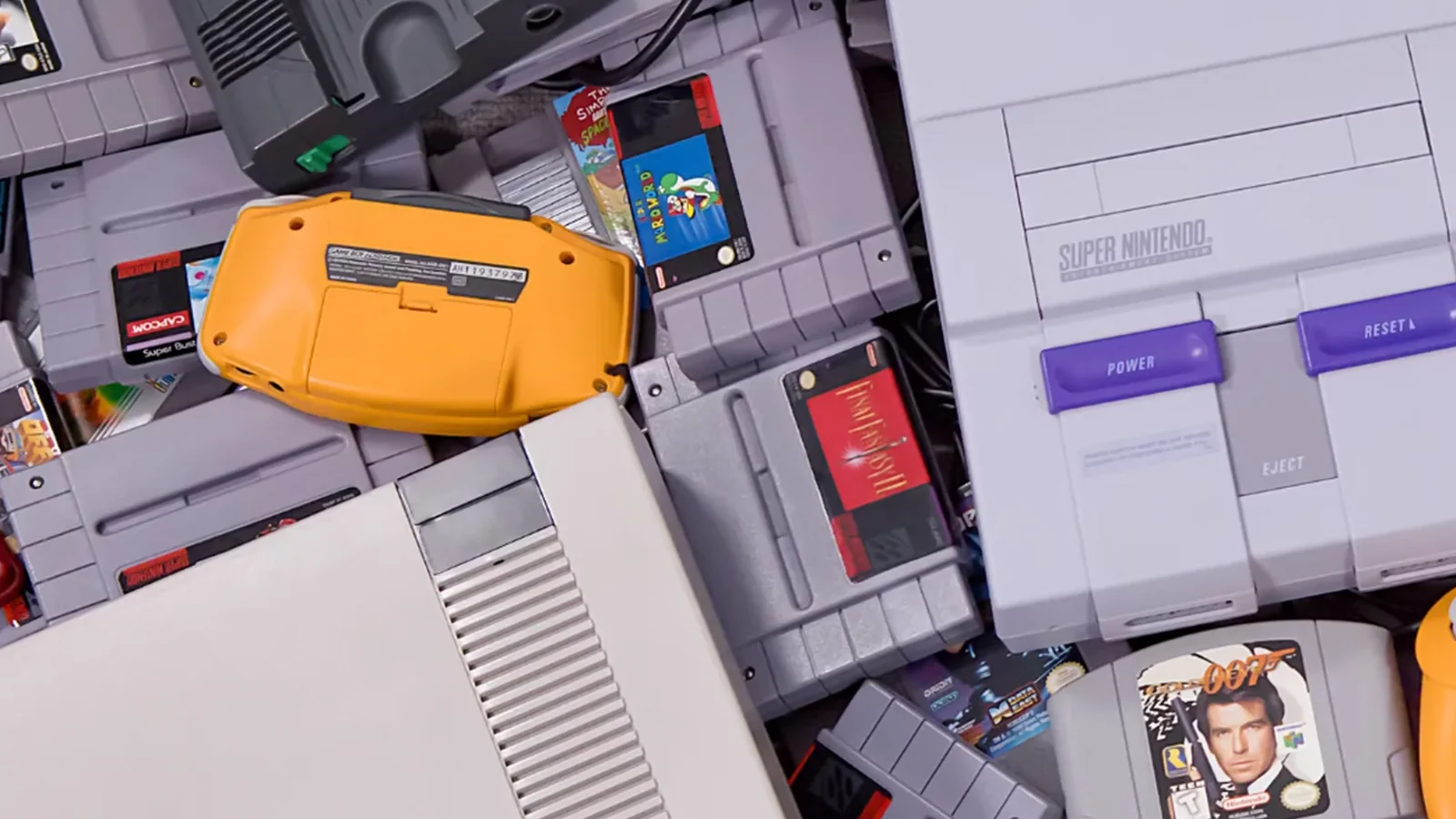
As retro video game collecting has become more popular, reproduction cartridges have become much easier to find.
Some reproductions are clearly labelled and sold as inexpensive alternatives for people who simply want to play a game.
The problem comes when a reproduction is represented as an original.
For collectors, the difference can be significant. An authentic cartridge may have historical and collectible value, while a reproduction is a modern copy made to resemble the original.
If you’re buying retro video games online, understanding some of the basic signs of authenticity can help you make a more informed purchase.
What is a reproduction video game?
Reproduction — “repro”
A newly manufactured copy of an older game. It may contain a playable version of the original while using a newly manufactured cartridge shell, label and circuit board.
Reproductions are commonly found for cartridge-based systems such as:
- Nintendo Entertainment System
- Super Nintendo
- Nintendo 64
- Game Boy
- Game Boy Color
- Game Boy Advance
- Sega Genesis
There is nothing inherently wrong with owning a reproduction when it is clearly disclosed.
Some players specifically purchase reproductions because they want an affordable way to play an expensive game on original hardware.
The issue is authenticity. If you’re purchasing something advertised as an original cartridge, you should receive an original cartridge.
Why authenticity matters
For someone who simply wants to play a game, authenticity might not be particularly important.
For collectors, it can be extremely important.
Original games can carry value because of their:
- Age
- Scarcity
- Condition
- Historical significance
- Original packaging
- Collectibility
A reproduction doesn’t have the same history.
This becomes especially important when dealing with valuable retro games. Paying an original-game price for a modern reproduction can result in a very expensive mistake.
Check the label
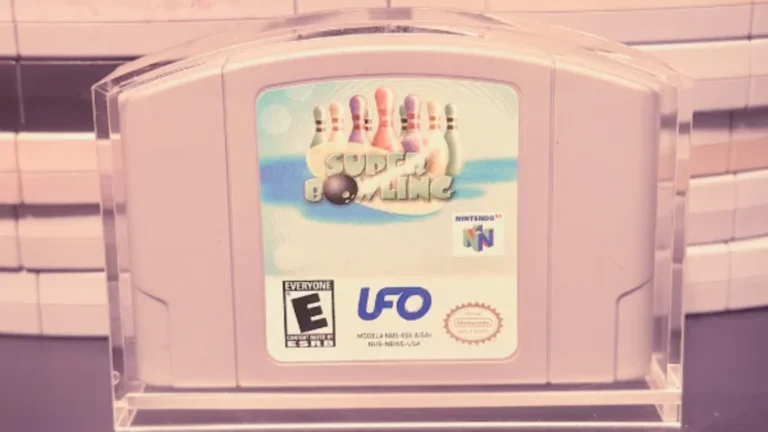
The label is often the first thing collectors examine.
Authentic labels were produced using the printing methods and materials available when the game was originally manufactured. Reproduction labels can sometimes look slightly different.
Things worth examining include:
- Print quality
- Colour accuracy
- Font
- Image sharpness
- Label placement
- Corners
- Surface finish
Poorly printed artwork or text that appears blurry can be a warning sign.
However, label condition alone isn’t enough to determine authenticity. Remember that some authentic games may also have replacement labels due to damage.
A replacement label doesn’t necessarily mean the cartridge itself is fake, but it can affect collectibility and value.
Check the cartridge shell
Original cartridge shells were manufactured to specific standards.
Reproduction shells can sometimes differ in:
- Plastic colour
- Plastic texture
- Weight
- Moulding
- Logo placement
- Lettering
- Cartridge shape
Some inexpensive reproduction shells may feel noticeably different from an original cartridge. Others can be much more convincing.
This is why collectors usually examine several different features rather than relying on one detail.
Look at the screws
Many original cartridges use specific types of security screws.
Nintendo cartridges, for example, commonly used proprietary security screws rather than standard Phillips screws. If a cartridge uses the wrong screw type, that can be a warning sign.
Keep in mind that screws can also be replaced over time. A replacement screw by itself doesn’t automatically prove that a cartridge is fake. It simply means you should take a closer look at the rest of the cartridge.
Examine the circuit board
For cartridge-based games, the internal circuit board is often one of the strongest indicators of authenticity.
Collectors experienced with retro games may open a cartridge and inspect the board. Original boards typically contain:
- Manufacturer markings
- Identification numbers
- Date codes
- Original ROM chips
- Consistent soldering
- Hardware appropriate to the game’s production period
Reproduction boards can sometimes look dramatically different. Modern reproductions may use newer components or circuit boards that clearly don’t match the age of the cartridge.
Other reproductions are considerably more sophisticated. This is why opening a cartridge can be helpful, but experience still matters.
Nintendo cartridge boards
Nintendo collectors frequently inspect cartridge boards when purchasing valuable games. Original boards often contain identifying information that can be compared against known examples.
For systems such as:
- NES
- SNES
- Nintendo 64
- Game Boy
- Game Boy Advance
The board layout can provide important clues. When dealing with expensive games, comparing the circuit board against trusted examples can be worthwhile.
Game Boy Advance games deserve extra attention
Game Boy Advance reproductions are particularly common. Popular Pokémon titles have been heavily reproduced over the years.
Collectors often examine several characteristics when checking GBA games, including:
- Cartridge shell
- Label
- Printed numbers
- Circuit board
- Battery type where applicable
- Board markings
Don’t trust a single tell
Older online guides sometimes suggest relying on one specific identifying characteristic. That can be risky. Reproduction manufacturers have become better at copying some of these details, so authenticity should be determined using multiple factors whenever possible.
Packaging can also be reproduced
Cartridges aren’t the only thing collectors need to watch. Boxes, manuals and inserts can also be reproduced.
This is particularly important with cartridge-based games originally sold in cardboard packaging. Original packaging for systems such as Nintendo 64, SNES and Game Boy can sometimes be worth more than the game itself.
Because of that value, reproduction boxes have become increasingly common.
When examining packaging, collectors may look at:
- Cardboard quality
- Printing
- Colours
- Fonts
- Folding
- Tabs
- Interior printing
- Product codes
- UPC placement
High-quality reproduction boxes can be difficult to identify from photographs alone. If you’re purchasing an expensive complete-in-box game, ask questions when necessary.
What about disc-based games?
Reproduction concerns are somewhat different for disc-based systems.
Collectors buying PlayStation games on our eBay store (opens in a new tab), Dreamcast, GameCube, PlayStation 2 and other disc-based games should still examine the item carefully.
Things to consider include:
- Disc artwork
- Disc underside
- Manufacturer markings
- Case quality
- Cover artwork
- Manual
- Printed codes
Burned discs or unofficial printed artwork are generally easier to identify than high-quality reproduction cartridges.
However, replacement cases, reprinted artwork and replacement manuals can still appear in collectible game listings. Again, disclosure matters.
Compare the game to known authentic examples
One of the best ways to evaluate a questionable game is to compare it against known authentic examples.
Look at:
- Cartridge shape
- Label placement
- Artwork
- Board layout
- Screws
- Printed numbers
- Packaging
Small differences become easier to notice when you’re looking at authentic examples side by side. This is especially helpful when evaluating expensive titles.
Be careful with prices that seem too good to be true
Price alone doesn’t determine authenticity. You can absolutely find legitimate bargains.
However, if a game normally sells for significantly more and one listing is dramatically cheaper, it’s worth looking closely at why. Possibilities might include:
- Poor condition
- Missing packaging
- Seller pricing error
- Reproduction cartridge
- Aftermarket components
Don’t automatically assume a cheap game is fake. Just take the time to investigate before buying.
Read the listing carefully
Some sellers clearly disclose that a game is a reproduction. Look for wording such as:
- Reproduction
- Repro
- Replica
- Replacement cartridge
- Aftermarket
- Replacement shell
- Replacement label
Never rely only on the listing title. Read the description and inspect the photographs.
Seller reputation matters
When buying collectibles online, seller reputation can be extremely valuable.
Check things such as:
- Feedback
- Previous sales
- Item descriptions
- Photographs
- Return policy
- How the seller responds to questions
An established seller who regularly deals with retro games may be more familiar with authenticity issues than someone selling one game they found in storage.
That doesn’t mean every experienced seller is perfect. It simply gives you more information to consider.
Genuine cartridges, discs and hardware only.
No reproductions, no bootlegs — ever. Every game is cleaned, tested on original hardware and photographed as the copy you actually receive.
Don’t be afraid to ask questions
If you’re considering an expensive game and something isn’t clear, ask the seller. Useful questions might include:
- Is this cartridge authentic?
- Has the cartridge been opened?
- Has the label been replaced?
- Is the shell original?
- Are the box and manual original?
- Can you provide additional photos?
A reputable seller should be able to answer reasonable questions about the item.
What if a cartridge has replacement parts?
Retro games are old. Over the years, some authentic cartridges may have received repairs. For example:
- Replacement battery
- Replacement screws
- Replacement shell
- Replacement label
That doesn’t necessarily mean the game itself is a reproduction. The important thing is knowing what is original and what has been replaced.
For collectors, this information can affect value.
Should you avoid reproduction games completely?
Not necessarily. Reproduction games can serve a purpose.
Some people want to play rare or expensive titles without spending hundreds of dollars on an original copy.
That’s completely different from buying a reproduction for a collection while believing it is authentic.
The key is transparency.
A reproduction should be clearly represented as a reproduction.
Buying retro games from Save Point Shop
Save Point Shop is a Canadian collector-run eBay store specializing in video games, trading cards and collectibles.
Our inventory regularly includes games and hardware from systems such as:
- Nintendo games on eBay (opens in a new tab)
- Super Nintendo games on eBay (opens in a new tab)
- Nintendo 64 games on eBay (opens in a new tab)
- GameCube games on eBay (opens in a new tab)
- Game Boy games on eBay (opens in a new tab)
- PlayStation games on eBay (opens in a new tab)
- Xbox games on eBay (opens in a new tab)
- Sega games on eBay (opens in a new tab)
Because retro games can vary significantly in age and condition, we aim to photograph and describe our inventory so buyers can see what they’re purchasing.
Our inventory changes frequently as new collections come through the shop.
Browse our current inventory through the Save Point Shop eBay store (opens in a new tab) to see what’s available now.
Have retro games to sell?
If you have an old video game collection sitting in storage, Save Point Shop also purchases games, consoles, trading cards and collectibles.
Instead of creating individual listings and managing buyers yourself, you can submit your collection to us for consideration. This can include:
- Retro games
- Modern games
- Consoles
- Controllers
- Accessories
- Trading cards
- Graded cards
- Collectibles
Visit our Sell Your Collection page to learn more about selling your collection directly to Save Point Shop. Not sure that is the right route? Our guide to where to sell video games in Canada compares every option.
Prefer to sell through consignment?
If you’re not looking for a direct offer, Save Point Shop also offers an eBay consignment option.
Through consignment, we can handle much of the selling process on your behalf. Depending on the collection, this can include:
- Preparing listings
- Photographing items
- Listing items on eBay
- Communicating with buyers
- Packing orders
- Shipping sold items
- Managing the selling process
Consignment may be an option for collectors who want access to an established eBay selling presence without handling every part of the process themselves.
Visit our consignment section to learn more about selling through Save Point Shop. Or read how eBay consignment works end to end.
Knowledge is one of the best tools a collector has
Identifying authentic retro games gets easier with experience. The more original cartridges, boxes and boards you see, the easier it becomes to recognize when something doesn’t look right.
No single characteristic should be treated as absolute proof.
Look at the entire item. Check the label, shell, screws, board, packaging and seller information together.
A little research before purchasing can help protect both your collection and your wallet.
Whether you’re adding another game to the shelf or selling a collection you’ve owned for years, knowing what you have is always valuable.
Shop Save Point Shop on eBay (opens in a new tab), sell your collection directly to us, or learn about our eBay consignment service.
By collectors, for collectors & gamers.