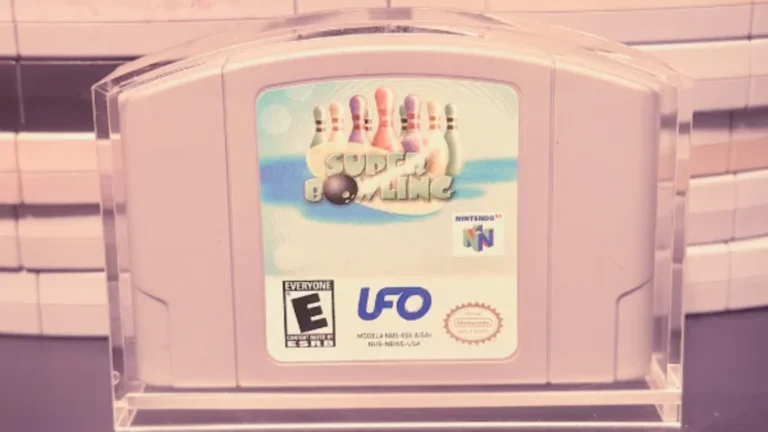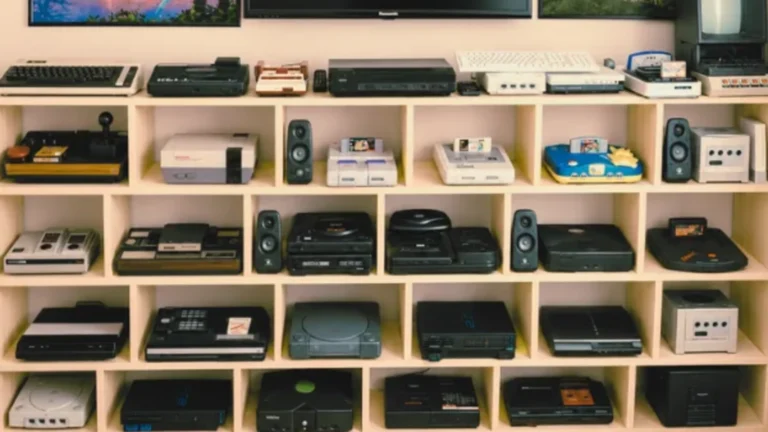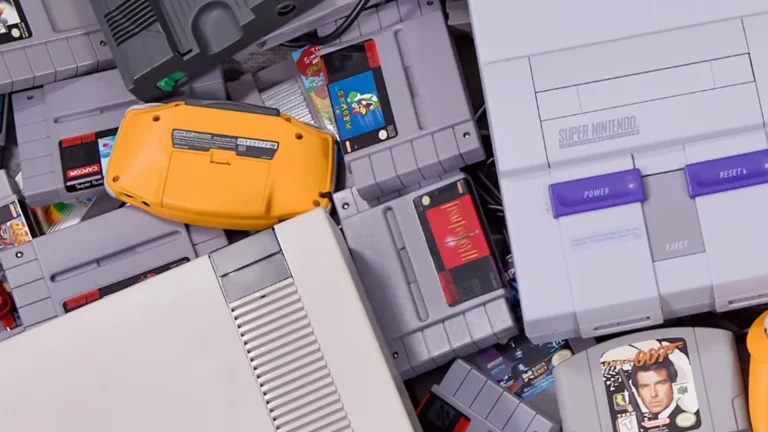
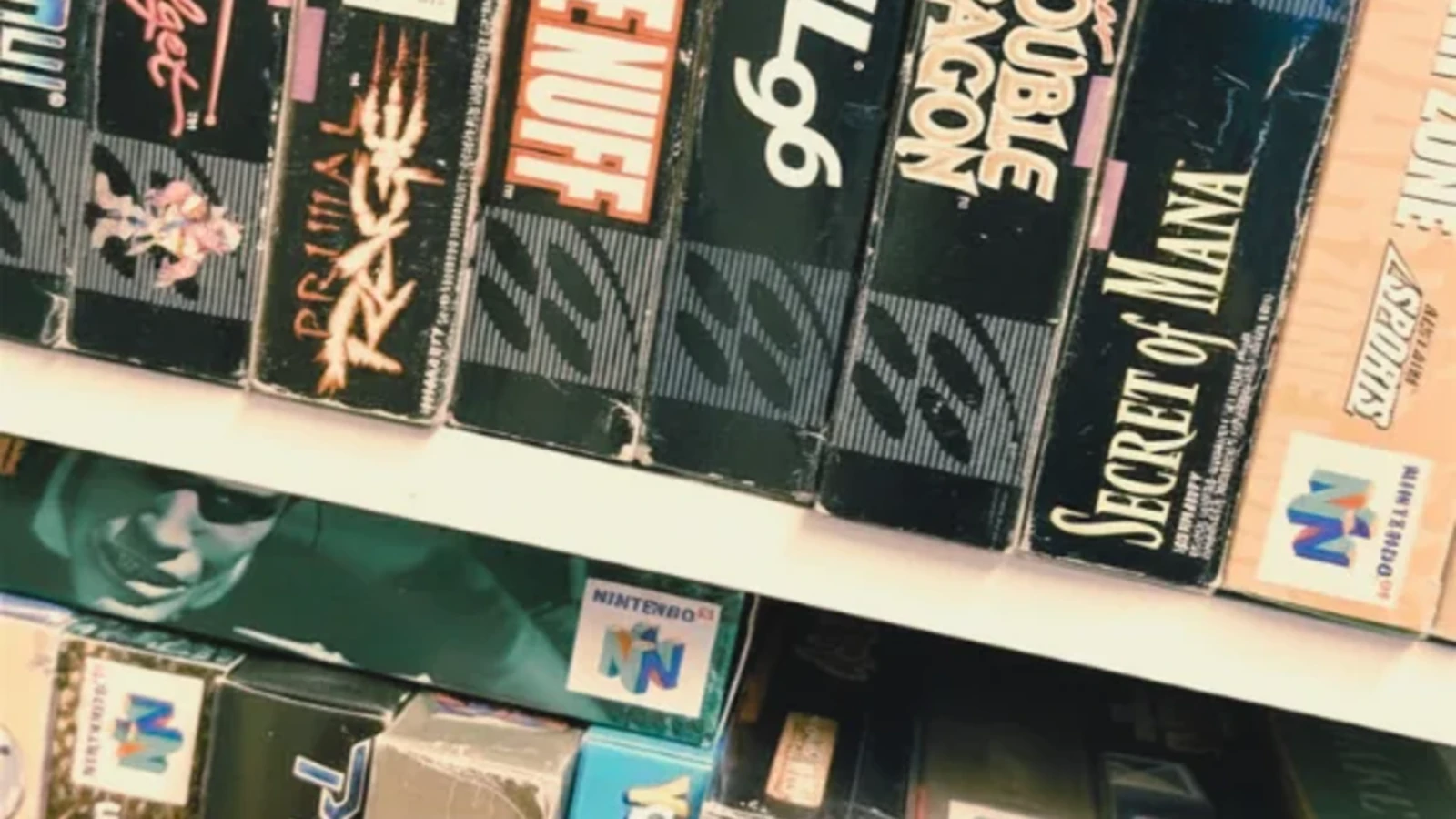
If you’ve recently opened an old box of Nintendo games on our eBay store (opens in a new tab), PlayStation games on our eBay store (opens in a new tab), Xbox games on our eBay store (opens in a new tab) or Sega games on our eBay store (opens in a new tab) games, there’s a good chance you’ve wondered: what are my old video games worth?
The answer can range from a few dollars to considerably more depending on the game, condition, completeness and current collector demand.
Some games that were extremely common when they were released remain inexpensive today. Others have become much harder to find.
And sometimes, two copies of the exact same game can have very different values depending on what’s included.
If you’re trying to figure out what your old video game collection might be worth, here are some of the most important factors to consider.
The game itself matters
The biggest factor is simply which game you have. Not every old game is automatically valuable.
Some games sold millions of copies and are still relatively easy to find. Others were produced in smaller quantities, had limited releases or became highly sought after years after their original release.
Games can become desirable because of:
- Low production numbers
- Limited releases
- Popular franchises
- Cult followings
- Competitive collecting
- Regional variants
- Unusual packaging
- Historical significance
- Increased interest in a particular console
Age alone does not determine value. A common 30-year-old game can sometimes be worth less than a much newer game that had a limited release.
Condition can make a big difference
Collectors care about condition. A game in excellent condition will often attract more interest than a heavily worn copy of the same title.
For cartridge games, collectors may look at:
- Label condition
- Cartridge shell condition
- Writing or stickers
- Discolouration
- Cracks or chips
- Corrosion
- Cleanliness
For disc-based games, condition can include:
- Scratches
- Disc cracks
- Centre-ring damage
- Case condition
- Cover artwork
- Manual condition
Normal wear isn’t unusual on games that may be several decades old. However, cleaner examples can sometimes command a premium.
Loose vs complete in box
One of the biggest differences in retro game value is whether the game is loose or complete.
Loose
A loose cartridge usually means the game itself without the original box or manual. For disc-based games, “loose” may refer to the disc by itself.
Loose copies are often the most affordable option for collectors who primarily want to play the game.
Complete in box — CIB
Collectors frequently use the abbreviation CIB, which generally means Complete in Box. A complete game may include the original game, the original box or case, the manual and any inserts.
For systems that originally used cardboard boxes, such as Nintendo 64, Super Nintendo and Game Boy, original packaging can make a substantial difference.
Cardboard boxes were frequently thrown away, damaged or lost over the years. As a result, surviving complete copies can be much harder to find than loose cartridges.
Original packaging can be valuable
Don’t automatically throw away old boxes, manuals or inserts. Even if the game isn’t especially rare, collectors may still want the original packaging.
Depending on the title, individual components can sometimes have their own value. This might include:
- Boxes
- Manuals
- Maps
- Posters
- Registration cards
- Inserts
- Strategy guides
- Special-edition packaging
If you’re sorting through an old collection, keep everything together until you know what you have.
Authenticity matters
Before estimating a game’s value, determine whether it is authentic. Reproduction cartridges have become increasingly common in retro gaming.
A reproduction may look similar to the original but generally doesn’t carry the same collector value.
Things collectors may examine include:
- Cartridge shell
- Label
- Screws
- Circuit board
- Manufacturing markings
- Packaging
If you’re unsure, research the game before assuming it is an original copy.
Read next
How to tell if a retro video game is authentic or a reproduction — labels, shells, screws, boards and packaging, and why no single tell is proof on its own.
Special editions and variants
Sometimes the exact version of a game matters. Collectors may pay attention to things such as:
- First-print versions
- Greatest Hits or Player’s Choice releases
- Collector’s editions
- Limited editions
- Regional versions
- Promotional copies
- Not-for-resale versions
- Packaging changes
- Different label variants
Two games with the same title may not necessarily have the same market value. When researching prices, make sure you’re comparing the exact version you own.
Consoles can have value too
Don’t overlook your old hardware. Retro consoles on our eBay store (opens in a new tab) can also be collectible.
Value can depend on:
- Console model
- Colour
- Edition
- Condition
- Included cables
- Included controllers
- Original box
- Manuals
- Whether the system works
Certain colour variants or limited-edition consoles can be more desirable than standard versions.
Accessories can also matter. Original controllers, memory cards, expansion accessories and unusual peripherals may have value on their own.
Don’t forget controllers and accessories
A box of “random gaming stuff” can sometimes contain items worth researching individually. This can include:
- Controllers
- Memory cards
- Expansion packs
- Rumble accessories
- Light guns
- Adapters
- Cables
- Multitaps
- Cases
- Console stands
- Special-edition accessories
Before selling a collection as one large lot, it can be worth identifying what is actually included.
How to research the value of your games
One of the best ways to estimate value is to look at what comparable items have actually sold for.
The important word is sold. An asking price does not necessarily represent market value. Someone can list a game online for any price they want. That doesn’t mean a buyer will pay it.
Check recently sold listings
When researching on marketplaces such as eBay, compare your item with recently sold examples. Try to match:
- Same game
- Same platform
- Same edition
- Similar condition
- Similar completeness
- Similar region
If your game is loose, don’t compare it with a sealed copy. If your game is complete, don’t base your estimate on loose cartridges. The closer the comparison, the more useful it becomes.
Don’t base value on one sale
Collectibles can fluctuate. One unusually high or low sale does not necessarily establish the value of an item.
Look at several recent sales when possible. That gives you a better idea of the range collectors are currently paying.
Asking price vs actual value
This is one of the most common mistakes people make when valuing old games.
You may search for a game and see listings priced at $50, $100, $250 or $500. That doesn’t mean the game is worth $500. Those are asking prices.
What matters more is what comparable copies have actually sold for. If similar copies repeatedly sell around the same range, that’s much more useful information.
Sealed games are a different market
Factory-sealed games can be considerably different from ordinary used copies. Collectors may examine:
- Seal type
- Condition
- Tears
- Creases
- Box damage
- Authenticity
- Print variation
- Overall presentation
A sealed game should not automatically be assumed to be extremely valuable, but certain titles can attract significantly more attention in unopened condition.
If you think you have an older factory-sealed game, it may be worth researching it carefully before opening it.
Graded games
Some collectors submit games to third-party grading companies. A graded game is evaluated, assigned a condition grade and sealed inside a protective holder.
Grading can affect how an item is marketed and collected, but it doesn’t automatically make every game valuable. The underlying game, condition and collector demand still matter.
Does testing affect value?
For many buyers, knowing that a game has been tested provides extra confidence. This is especially true for:
- Older consoles
- Disc-based games
- Cartridge games with save batteries
- Controllers
- Accessories
An untested item may still have value, but buyers may account for the risk that it doesn’t work.
Everything we sell is tested before it is listed.
Cleaned, tested on original hardware and photographed as the copy you actually receive — which is the same standard worth applying to anything you buy.
What about rare games?
Some games are genuinely scarce. But the word “rare” is often overused.
A game can be old without being rare. It can also be uncommon without being particularly valuable.
Generally, collector value comes from some combination of:
Scarcity + demand + condition + completeness
A game that is extremely scarce but nobody wants may not command a high price. A game that is common but extremely popular may still have strong demand.
Should you sell games individually or as a collection?
This depends on what you have and how much work you want to do.
Selling games individually may potentially produce a higher total return because desirable titles aren’t grouped together with lower-value items.
However, it also means more work. Individual selling can involve:
- Researching every item
- Photographing everything
- Creating listings
- Answering questions
- Packing orders
- Shipping
- Managing returns
- Tracking payments
Selling everything together is usually simpler. That’s why it’s important to decide whether your priority is convenience, speed or maximizing potential return. Our guide to where to sell video games in Canada compares eBay, local marketplaces, game stores, direct sales and consignment side by side.
Selling your video games directly to Save Point Shop
If you’d rather avoid listing and shipping every game yourself, Save Point Shop purchases video games, consoles, trading cards and collectibles directly from customers.
You can submit information about your collection and we can determine whether it’s something we’re interested in purchasing. This can be a good option if you have:
- A childhood video game collection
- Retro consoles
- Modern games
- A collection you’re downsizing
- Trading cards
- Graded cards
- Collectibles
- A large mixed collection
Selling directly can simplify the process because you don’t have to deal with individual buyers.
Visit our Sell Your Collection page to learn more about selling your collection directly to Save Point Shop.
Want to sell through eBay without doing the work yourself?
If you’d rather have your items sold individually but don’t want to manage the process yourself, consignment may be another option.
Save Point Shop offers an eBay consignment service for qualifying video games, trading cards and collectibles. We can handle much of the process, including:
- Research
- Photography
- Listing preparation
- eBay listings
- Buyer communication
- Packing
- Shipping
- Managing the sales process
Consignment can be useful for collectors who want their items exposed to eBay buyers without becoming an eBay seller themselves.
Visit our consignment section to learn more about how the process works. We have also written up how eBay consignment works step by step.
What is your collection actually worth?
There isn’t one formula that works for every video game collection. The value depends on exactly what you have.
A collection with hundreds of common games may be worth less than a small collection containing a few highly desirable titles.
Before deciding what to do, take some time to identify:
- Games
- Consoles
- Accessories
- Special editions
- Boxes
- Manuals
- Condition
- Authenticity
You may discover that something you haven’t thought about in years has become collectible. You may also discover that some games aren’t worth as much as you expected.
Either result is normal.
Don’t throw anything away until you’ve checked it
If you’re cleaning out an old collection, avoid throwing away gaming-related items until you’ve identified them. That includes:
- Boxes
- Manuals
- Controllers
- Cables
- Inserts
- Memory cards
- Accessories
- Promotional items
Collectors sometimes value pieces that don’t look particularly important at first glance. Keeping the original components together can also make a game more appealing to collectors.
Ready to find out what your collection is worth?
Whether you have five games or an entire room full of them, the first step is figuring out exactly what you have.
Research comparable sales, consider condition and completeness, and decide how much work you want to put into selling.
If you’d rather have someone else handle the next step, Save Point Shop can help. You can sell your video games and collectibles directly to us or explore our eBay consignment service if you’d prefer to have us manage the selling process for you.
And if you’re still collecting rather than selling, our guide to where to buy retro video games in Canada covers what to check before you buy — or browse our latest inventory through the Save Point Shop eBay store (opens in a new tab).
By collectors, for collectors & gamers.